
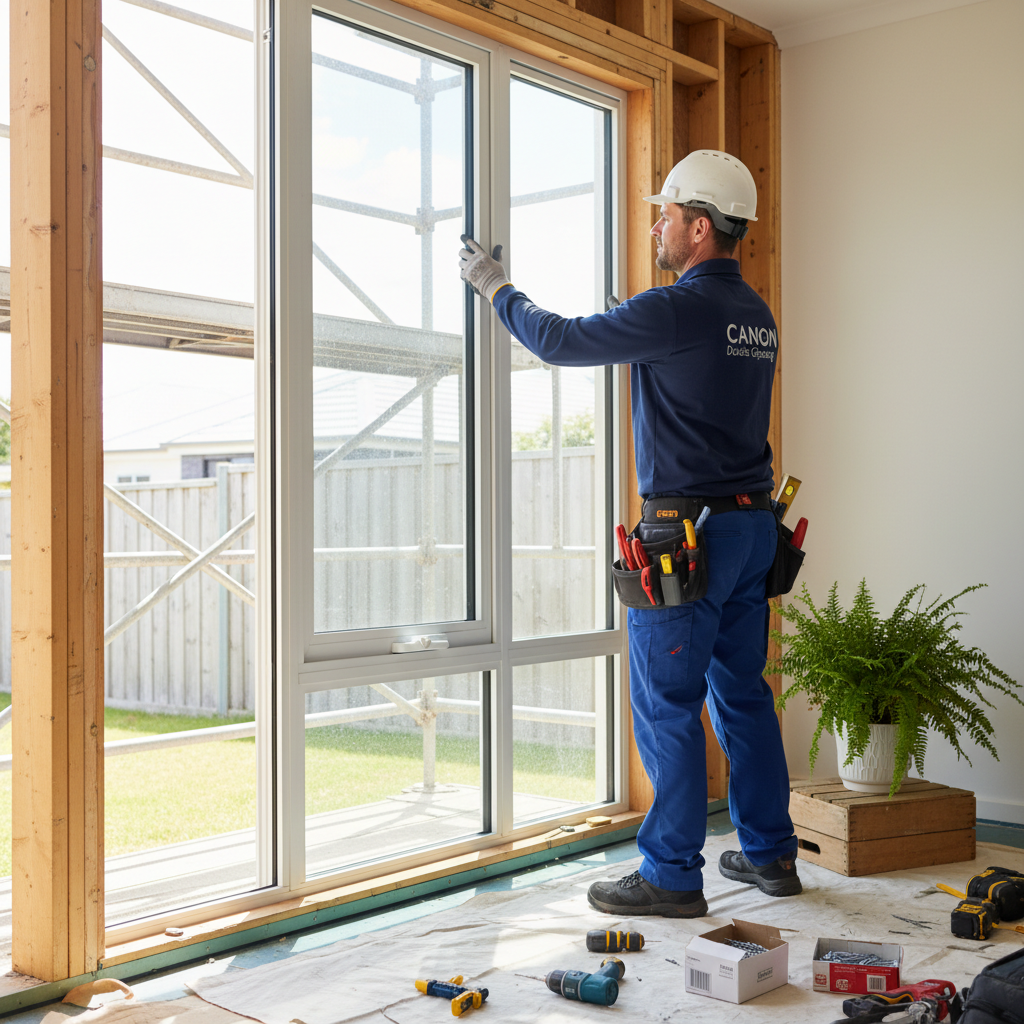
Double glazing greatly reduces condensation on windows, but it does not stop it on its own. A double glazed unit keeps the inside pane warmer, so the air in the room can hold far more moisture before water forms on the glass. If the home produces more moisture than it vents, or the frame stays cold, condensation and dampness can still appear. Ventilation and steady heating finish the job that the glass starts.
This guide explains why condensation forms and why Perth homes get it on winter mornings. It shows how condensation turns into damp and mould, and where it can still appear on double glazed windows. It also sets out practical steps to stop condensation and what to look for in windows that keep it away.
Does Double Glazing Stop Condensation?
Double glazing stops most condensation on the glass, but not all of it in every room. Condensation forms when the inside pane drops below the dew point of the room air. A double glazed unit keeps that pane much closer to room temperature, so it takes far more indoor moisture before water appears. In a well-ventilated home that is usually enough to keep the glass dry, but a steamy bedroom or bathroom can still push past the limit.
A classic study by the National Research Council Canada on condensation on inside window surfaces measured exactly how much headroom double glazing adds. With 21°C inside, 4°C outside and still air, single glazing began to fog once indoor humidity passed 59%, while double glazing stayed dry up to 73%. In a 24 km/h wind, the gap was wider still, at 44% for single glazing against 68% for double glazing. The figures come from a 1960 building digest by A.G. Wilson, and the physics behind them has not changed.
Double glazing raises the bar, but the amount of moisture in the air still decides whether that bar is cleared. Understanding where that moisture comes from explains why some homes struggle more than others.
Why Condensation Forms on Windows
Condensation forms when warm, moist air touches a surface colder than its dew point. The dew point is the temperature at which air becomes fully saturated and starts to release water as droplets. Air at 20°C and 65% relative humidity, for example, has a dew point of about 13°C. Windows are usually the coldest surfaces in a room, so they are where that water appears first.
The Australian Building Codes Board’s Condensation in Buildings Handbook shows how much moisture an ordinary home produces. It estimates that a family of four generates roughly 7 to 22 kg of water vapour a day. The occupants alone breathe out about 5.5 kg, unvented showers add about 6 kg, cooking with unvented gas about 5 kg and an unflued gas heater about 4 kg. That water stays in the air until it is vented outside or meets a surface cold enough to collect it.
A home that produces that much moisture needs only a cold enough surface to show it. In Perth, that surface turns up reliably once the winter nights arrive.
Why Perth Homes Get Condensation in Winter
Perth homes get condensation in winter because cold nights chill the glass while the house fills with moisture from sleeping, cooking and showering. Many older Perth homes still have single glazed aluminium windows, which cool down almost to the outside temperature overnight. When the heater goes on in the morning, warm moist air meets that cold glass and frame. The result is the wet windows and pooled sills that many households wipe down every winter morning.
Climate records from the Bureau of Meteorology for Perth Metro show how cold those nights get. Between 1994 and 2026, the station averaged a minimum of 8.1°C in July, 8.7°C in June and 8.5°C in August, with an average of 2.0 nights in July falling to 2°C or below. Inland suburbs and the Perth Hills often run colder than the metro station. At those temperatures, a single glazed window can easily fall below the dew point of a bedroom’s air before dawn.
A wet window on its own is a nuisance. Left to happen morning after morning, the water starts to affect the frame, the wall and the air the household breathes.
How Condensation Leads to Dampness and Mould
Repeated condensation leads to dampness when water runs off the glass onto sills, frames and wall linings faster than it can dry. Timber sills swell and rot, plaster around the window stains and paint starts to peel. The damp area then gives mould the moisture it needs to grow. Black spots on window seals, reveals and curtains are often the first sign that condensation has become a damp problem.
Guidance from WA Health on mould and dampness names excess moisture as the key driver of mould and lists poor ventilation, showering or cooking without exhaust fans, clothes dryers and unflued gas heaters among the indoor causes. It links mould and dampness to asthma attacks, respiratory infections, eczema, sinus problems and itchy eyes, with people who have serious mould allergies or chronic lung disease most at risk. The ABCB handbook adds that relative humidity above about 60% encourages mould and dust mites, and suggests keeping indoor humidity between 30% and 60%.
Better windows reduce how often that water appears, but they do not remove every cold spot. Even a double glazed window has places where condensation can still collect.
Where Condensation Can Still Appear With Double Glazing
Condensation can still appear on a double glazed window in four places, and each one means something different. Some are signs of a problem, while others are perfectly normal. These are the four places to check.
On the Frame
A metal frame that runs from the outside to the inside carries cold straight through to the room. The NRC study found that metal frames on double glazed windows need a thermal break, a strip of low-conducting material, to avoid condensing at the same humidity as single glass. In an aluminium-framed home, water may disappear from the glass but keep forming on the frame. Insulated frames such as uPVC or timber stay much warmer on their inside face.
Along the Bottom Edge of the Glass
Condensation on double glazing usually starts along the bottom edge of the glass. The air inside the sealed cavity is coolest at the bottom, and the spacer bar that holds the panes apart can chill the edge further. Window sills and deep reveals also block warm room air from reaching the lower glass. Warm-edge spacers, made from less conductive materials than aluminium, reduce this effect.
Between the Panes
Fog or droplets between the two panes mean the unit’s edge seal has failed. Moist air has leaked into the cavity and saturated the desiccant, the drying agent inside the spacer bar. This cannot be wiped away, because it sits inside the sealed unit. In most cases the glass unit needs replacing, although the frame can often stay.
On the Outside of the Glass
Dew on the outside of a double glazed window on a clear, still morning is normal. It happens because the outer pane loses heat to the night sky while the insulated unit keeps indoor warmth from reaching it. The outer glass then cools below the dew point of the outside air, just like a car windscreen. It clears as the sun warms the glass and is a sign the window is insulating well.
Only the frame and between-pane cases point to a window problem. In most homes, the bigger gains come from changing how moisture is produced and removed day to day.
How to Stop Condensation on Windows
You stop condensation on windows by producing less moisture, venting what you do produce and keeping the glass warmer. Most of these steps cost little or nothing. Work through them in order, starting with the ones that remove the most water.
- Run exhaust fans while showering and cooking. Keep them on for several minutes afterwards and make sure they vent outside, not into the roof space.
- Dry clothes outdoors or in a vented dryer. Washing dried inside releases its water straight into the room.
- Avoid unflued gas heaters. Choose a flued heater or a reverse-cycle air conditioner, which add no water vapour.
- Air out the house each day. Open windows on opposite sides for a few minutes, ideally in the late morning when outdoor air is drier.
- Heat steadily rather than in short bursts. A steady room temperature keeps walls and windows from cooling far below the air.
- Open curtains and blinds during the day. Heavy coverings trap cold, damp air against the glass.
- Wipe windows and sills each morning. Removing the water stops it soaking into frames and wall linings.
- Upgrade single glazed windows. Double glazing in an insulated frame warms both the glass and the frame.
Heating and ventilation work best together. The Australian Government’s Energy Made Easy service recommends setting winter heating between 18°C and 20°C, and notes that each degree lower can save up to 10% on heating energy. Keeping within that range avoids the cold rooms where condensation forms and the overheated rooms that waste power. Removing a single unflued gas heater can cut about 4 kg of water vapour a day, according to the ABCB handbook. Once moisture is under control, the windows themselves decide how much of what remains ends up on the glass.
Choosing Windows That Keep Condensation Away
Windows that keep condensation away combine warm glass, a warm frame and tight seals. Each part lifts the surface temperature on the room side, which raises the humidity needed before water forms. These are the features to look for.
Insulated Frames
An insulated frame keeps the inside face of the window close to room temperature, so water does not simply move from the glass to the frame. uPVC and timber both insulate far better than standard aluminium. If you prefer aluminium, choose a thermally broken frame, which separates the inside and outside metal with a plastic strip.
Argon Fill and Low-E Glass
An argon-filled cavity insulates better than air, which keeps the inner pane slightly warmer. A low-E coating, a thin metal oxide layer that reflects heat back into the room, adds further warmth to the inside surface. Together they lower the chance of condensation on the coldest nights, particularly on south-facing windows that never see the sun in winter.
Warm-Edge Spacers
The spacer bar around the edge of the glass is often the coldest part of the unit. Warm-edge spacers use plastic or composite materials instead of plain aluminium. They reduce the cold strip along the bottom of the glass where condensation usually starts.
Quality Seals and Installation
A window only stays dry if it is sealed properly to the wall around it. Gaps between the frame and the opening let cold air in and create cold spots on the reveal. Proper fixing, flashing and sealing during installation keep the whole opening warm and dry.
The right window removes most of the cold surfaces that condensation needs. The practical questions that come up next are usually about what is normal and when to act.
Frequently Asked Questions About Condensation and Double Glazing
These are the questions Perth homeowners ask most often about condensation, dampness and double glazing.
Why do I still get condensation with double glazing?
Double glazing raises the humidity needed for condensation, but a room with very high humidity can still pass it. Bedrooms with several people sleeping and the door shut, and bathrooms without exhaust fans, are the usual culprits. Cold aluminium frames and the bottom edge of the glass are also common spots. Better ventilation and steady heating usually solve it.
Do I need new windows if I have condensation?
Not always. Light condensation on cold mornings is normal with single glazing and can often be managed with ventilation and heating. New windows are worth considering when water pools on sills every day, mould keeps returning to frames and reveals, timber is rotting or there is fog between the panes of existing double glazing.
Does condensation on windows mean the house is too cold?
It means the glass is colder than the dew point of the room air, which can be due to cold glass, humid air or both. A home heated to 18°C to 20°C with good ventilation rarely gets heavy condensation on double glazing. Heavy condensation in a warm room usually points to too much moisture rather than too little heat.
Should I be worried about condensation on windows?
Occasional condensation that clears by mid-morning is not a concern. Daily condensation that soaks the sill, stains the plaster or grows mould is worth fixing, because ongoing damp can damage the building and affect health. People with asthma or mould allergies are most affected.
What can I put on windows to stop condensation overnight?
No product placed on the glass stops condensation on its own. Moisture absorbers and towels on the sill catch some water but do not fix the cause. Opening curtains slightly so air can circulate, running a dehumidifier in the problem room and avoiding drying clothes indoors make a much bigger difference.
Will double glazing get rid of existing mould?
No. Double glazing reduces the condensation that feeds mould, but existing mould still needs cleaning. WA Health recommends scrubbing hard surfaces with soapy water, wearing gloves, a mask and goggles, then drying the area and fixing the moisture source. Large or returning mould needs professional help.
Does double glazing make a house more humid?
Double glazing does not add moisture to the air. It can make a home more airtight, though, so moisture that used to escape through gaps around old windows stays inside longer. That makes exhaust fans and daily airing more important after an upgrade.
Stopping Condensation and Dampness in Your Perth Home
Condensation on windows comes from moist indoor air meeting a cold surface, and double glazing removes much of that cold surface. You can manage moisture with fans, airing and steady heating, upgrade the windows or do both for the driest result. Left alone, daily condensation soaks sills, stains plaster and feeds the mould that WA Health links to asthma and respiratory problems. Perth’s 8°C winter nights make the coldest months the time when single glazing struggles most.
Canon Double Glazing manufactures and installs uPVC double glazed windows and doors in-house across Perth, with insulated frames that keep both the glass and the frame warm. The guide to uPVC double glazing explains how the frame works, and you can book a free measure and quote or call (08) 9249 9974.