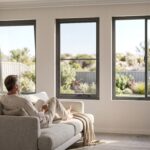

uPVC double glazing is a window that sets a sealed double glazed unit in a frame made of unplasticised polyvinyl chloride (uPVC), a rigid plastic usually reinforced with steel. uPVC insulates far better than standard aluminium, so the frame no longer lets heat bypass the glass. The Australian Government’s YourHome guide rates a double glazed uPVC window at a U-value of 3.0, against 4.2 for the same glass in aluminium.
This guide explains what uPVC windows are and why they pair so well with double glazing. It covers how they handle Perth’s heat, winter mornings, noise and coastal salt air, and what they need in the way of care. It also looks honestly at fire and bushfire risk, the downsides of uPVC and how to check a window’s quality before you buy.
What Are uPVC Windows?
uPVC windows are windows with frames made from unplasticised polyvinyl chloride, a rigid form of PVC with no softening additives. The same family of plastic is used for water pipes, which shows how well it stands up to moisture. Window frames are made by extrusion, where heated uPVC compound is pushed through a shaped die to form long hollow profiles. Inside, each profile is divided into several air chambers, and the main chambers carry steel reinforcement for strength.
That hollow, chambered design is what gives uPVC its insulating edge. The YourHome glazing guide states that uPVC insulates about as well as timber, while aluminium conducts heat readily. Its indicative figures show the effect even with plain single glazing. A single glazed aluminium window rates a U-value of 6.9, where the same glass in a timber or uPVC frame rates 5.5, about 20% better. A U-value measures how easily heat passes through a window, so a lower number means better insulation.
A better frame on its own only goes so far, because most of a window’s area is still glass. The real gains come when that frame is paired with a sealed double glazed unit.
Why uPVC and Double Glazing Work Better Together
uPVC and double glazing work better together because each one fixes the weak point the other leaves behind. Double glazing slows the heat moving through the glass, and a uPVC frame stops heat taking a shortcut around it. Put a double glazed unit in a plain aluminium frame, and the metal still carries heat between the inside and outside faces. Put it in uPVC, and the whole window insulates as one system.
Government figures show the size of that difference. The YourHome glazing guide lists the same 3 mm/6 mm air/3 mm double glazed unit at a U-value of 4.2 in aluminium and 3.0 in timber or uPVC, which is about 29% less heat flow from the frame alone. The NatHERS window factsheet shows that even a thermally broken aluminium frame, which has a plastic strip separating the inner and outer metal, rates 3.6 with air-filled double glazing. An argon-filled unit in an insulated frame brings the figure down to 2.6.
The glass physics behind those numbers are covered in the guide on how double glazing works. In Perth, the payoff shows up most clearly on the hottest days of the year.
How uPVC Double Glazing Performs in Perth’s Climate
uPVC double glazing suits Perth because it eases the three things local homes struggle with most, which are summer heat, cold winter mornings and outside noise. Each benefit comes from the frame and glass working together. These are the conditions where the difference is easiest to feel.
Summer Heat
Perth Metro averages 27.0 days a year at or above 35°C and 4.2 days at or above 40°C, according to Bureau of Meteorology records from 1994 onwards. YourHome estimates that up to 87% of a home’s heat gain comes through its windows. A uPVC frame also lets less of the sun’s heat through than aluminium, with YourHome listing a solar heat gain coefficient (SHGC) of 0.61 against 0.69 for the same double glazing. SHGC measures how much solar heat passes through, and adding low-E or tinted glass on east and west windows lowers it further.
Cold Winter Mornings
YourHome estimates that up to 40% of a home’s heating energy can be lost through windows. A uPVC frame stays close to room temperature on its inside face, while an aluminium frame chills to near the outside temperature. That warmer surface means less condensation on the frame on cold mornings in the Hills and inland suburbs. It also removes the cold strip you feel when standing next to an old metal window.
Outside Noise
Noise gets through a window in two ways, through the glass and through any gaps around the sash. A building digest by the National Research Council Canada found that a well-weatherstripped opening window typically rates 3 to 5 points lower on sound tests than the same glass sealed shut. uPVC windows use flexible EPDM gaskets, a synthetic rubber, to close those gaps tightly. The same research found that laminated glass and panes of different thicknesses both improve sound blocking.
These benefits hold up year after year only if the frame itself lasts. That is where uPVC’s resistance to Perth’s harsher conditions comes in.
How Durable and Low-Maintenance Are uPVC Windows?
uPVC windows need very little maintenance because the material does not rot, rust or need painting. They still need occasional cleaning and a check of moving parts. These are the main durability points that set uPVC apart from timber and aluminium.
No Rot, Termites or Repainting
Timber frames need regular sanding, sealing and painting to keep out moisture, and untreated timber can attract termites. uPVC has no wood fibre for rot or insects to attack. Its colour runs through the material or sits in a bonded laminate, so there is no paint to flake or peel. That saves the repainting cycle that timber windows need every few years.
Salt Air and Corrosion
Coastal air carries salt that attacks exposed metal over time. The Western Australian Department of Finance notes that corrosive conditions around Perth can extend several kilometres inland, not just along the beachfront. uPVC itself does not corrode, which makes it a strong choice for coastal suburbs. The steel reinforcement sits sealed inside the frame chambers, away from direct contact with the weather.
Cleaning and Care
Wipe uPVC frames with warm soapy water and a soft cloth every few months. Avoid abrasive pads and strong solvents, which can dull the surface. Keep the small drainage holes in the sill clear so rainwater can escape, and give hinges and locks a light lubricant once a year. These simple steps keep the seals and hardware working smoothly for longer.
Low maintenance is not the same as no risk, though. The question many owners ask next is how a plastic frame behaves if it ever meets a flame.
Is uPVC Fire Resistant?
uPVC is hard to ignite and tends to stop burning once the flame source is removed, but it is not fireproof. The high chlorine content of PVC slows burning, so a uPVC frame will not keep burning on its own the way timber can. In a fully developed house fire, uPVC softens, deforms and gives off smoke that contains hydrogen chloride. That is why uPVC is best described as flame-retardant rather than fire-resistant.
Research published in The Chemist, the journal of the American Institute of Chemists, reports that rigid PVC contains about 56% chlorine and has a limiting oxygen index of about 47 (Manjunath et al.). The limiting oxygen index is the lowest share of oxygen in the air that lets a material keep burning. A University of Wollongong combustion review explains that ordinary air contains about 21% oxygen and classes materials with an index above 28 as self-extinguishing. Rigid PVC sits well above that line, so it needs far more oxygen than air provides to keep burning once the flame is removed.
Self-extinguishing behaviour helps in a small fire, but bushfire is a different test. Homes near bushland face rules that look at the frame material itself, not just how it burns.
uPVC Windows in Bushfire-Prone Areas
Homes in bushfire-prone areas must use windows that meet the Bushfire Attack Level (BAL) set for the site under Australian Standard AS 3959. BAL measures how much ember attack, radiant heat and flame a building could face, and it sets the minimum glass and frame specification. uPVC is classed as a combustible material, so it is not suitable at every BAL. Parts of the Perth Hills and outer suburbs fall into these zones, so check your rating before choosing any frame.
Bushfire research from CSIRO on windows and doors describes poorly built windows as a weak point in a home, because glass can crack from radiant heat, strong wind or direct flame. Its guidance links annealed glass in a non-combustible or durable timber frame with BAL-12.5, toughened glass in a non-combustible frame with BAL-29 and fire-rated glass with BAL-40. CSIRO also recommends metal mesh screens with gaps under 2 mm on opening windows to keep embers out.
For most suburban Perth homes outside bushfire zones, this rule never comes into play. It is still one of several honest trade-offs worth weighing before you choose uPVC.
What Are the Disadvantages of uPVC Windows?
uPVC windows have a few real downsides, mostly around frame size, colour choice and long-term ageing. None of them rule uPVC out, but each is worth knowing before you order. These are the main trade-offs.
- Less glass area. uPVC frames are bulkier than aluminium, so they let in slightly less light. YourHome lists visible light transmission of 0.65 for double glazed uPVC against 0.72 for aluminium.
- Narrower colour range. Colours come from the compound or a laminate, so the choice is smaller than powder-coated aluminium and frames are not meant to be repainted.
- More movement in heat. Plastic expands more than metal as it warms, so frames must be well made and correctly fixed to stay square.
- Bushfire limits. As a combustible material, uPVC is not suitable for the higher bushfire attack levels.
- UV ageing in poor-quality frames. Cheap profiles with weak UV stabilisers can turn brittle over time.
A peer-reviewed life cycle study in the International Journal of Life Cycle Assessment makes the ageing point clear. Carlisle and Friedlander (2016) compared aluminium, timber, aluminium-clad timber and uPVC frames over an 80-year building life and found that expected service life was the most important factor in each frame’s environmental impact. They noted that once uPVC’s UV-inhibiting layer breaks down, the material can become brittle and crack, and that well-maintained aluminium came out with the lowest impact thanks to recycling credits and a long expected life. The lesson is that frame quality decides whether uPVC delivers its full working life, which makes knowing what to look for essential.
How to Choose Quality uPVC Double Glazed Windows
Quality uPVC double glazed windows show their standard through compliance labels, steel reinforcement and good seals. Most of these checks can be done in a showroom or on the quote itself. Work through this list before you sign.
- Check for an AS 2047 label. The Australian Standard for windows covers wind resistance, water penetration and air infiltration.
- Confirm the glass meets AS 1288. This standard sets the right glass type and thickness for each location, such as doors and low windows.
- Ask about steel reinforcement. The main frame chambers should carry galvanised steel along their length.
- Look at the seals and locks. EPDM gaskets around the sash and multi-point locks hold the window tight against draughts and noise.
- Read the warranty. Look for cover on the frame, the hardware and the sealed glass unit, and note how long each part is covered.
Compliance labels matter more than many buyers realise. A Queensland Building and Construction Commission fact sheet explains that non-timber windows in houses must carry a compliance label that stays visible after installation, showing the manufacturer and the wind and water ratings. It also warns that glass certified to AS 1288 alone is not enough evidence that the whole window complies. The uPVC windows Perth range sets out how Canon Double Glazing’s frames are built.
Frequently Asked Questions About uPVC Double Glazing
These are the questions Perth homeowners ask most often about uPVC windows and double glazing.
What does uPVC stand for?
uPVC stands for unplasticised polyvinyl chloride. The “unplasticised” part means no softening additives are used, so the material stays rigid and strong enough to form window and door frames. Flexible PVC, used for things like garden hoses, contains plasticisers that uPVC does not.
What is double glazed uPVC?
Double glazed uPVC is a window or door that combines a uPVC frame with a sealed double glazed unit of two glass panes and an insulating gap. The frame and glass work together, so heat cannot bypass the glass through the frame as it does with standard aluminium.
Which is better, aluminium or uPVC windows?
uPVC insulates better and does not corrode, which suits hot summers and coastal air. Aluminium allows slimmer frames, more glass, a wider colour range and use at higher bushfire attack levels. For most Perth homes focused on comfort and energy use, uPVC is the stronger choice, while aluminium suits large glass walls or high-BAL sites.
Are uPVC windows fireproof?
No. uPVC is hard to ignite and stops burning once the flame is removed, but it softens and deforms in a serious fire. It is also classed as combustible for bushfire purposes, so it cannot be used at the higher bushfire attack levels.
How long do uPVC windows last?
Well-made uPVC windows with good UV stabilisers can last for decades with simple care. Lifespan depends on profile quality, hardware and how much harsh sun the frame takes. A long warranty on the frame, hardware and glass unit is the best sign of how long a manufacturer expects its windows to last.
Can uPVC windows be painted?
Painting is not recommended. Paint does not bond well to uPVC and can peel, and it may void the warranty. If you want a different look, choose a laminate finish such as a wood grain at the time of ordering.
Are uPVC windows secure?
Yes, when they are well built. Steel reinforcement inside the frame resists forcing, and multi-point locks secure the sash at several points. Internally beaded windows, where the glass is held in from the inside, stop the glass being removed from outside the house.
How much do uPVC double glazed windows cost in Perth?
Based on Canon Double Glazing’s current guide prices, a double glazed uPVC window typically costs $3,500 to $5,500 per opening installed. A typical 3×2 home runs from about $18,000 to $20,000. Size, glass type, finish and access all change the final figure.
Choosing uPVC Double Glazing for Your Perth Home
uPVC double glazing pairs a sealed double glazed unit with an insulated, steel-reinforced frame, so the whole window keeps heat out rather than just the glass. You can keep single glazed aluminium, add double glazing to metal frames or replace both glass and frame together. Leaving old aluminium in place means another summer of heat moving through the frame on Perth’s 35°C days. With about 27 such days a year on average, the choice of frame shows up in every power bill.