The main benefits of double glazing are a cooler home in summer, a warmer one in winter, lower cooling and heating bills, quieter rooms and less condensation. It also slows fading, adds security and may lift a home’s value. In Perth the biggest gain is summer comfort, because up to 87% of a home’s heat gain comes through its windows. The trade-offs are a higher upfront cost, seals that cannot be repaired once they fail and limits on what clear glass alone can do against direct sun.
This guide sets out each benefit with the evidence behind it, starting with summer heat and winter warmth. It covers power bills, noise, condensation, fading, security and property value. It then looks honestly at the downsides and explains how to choose double glazing that delivers the full benefit.
The Benefits of Double Glazing at a Glance
Double glazing benefits a home in eight main ways, from comfort and running costs to health and resale. Some gains apply to every home, while others depend on the frame and glass chosen. The table below summarises each benefit and the evidence behind it.
| Benefit | What changes | Evidence |
|---|---|---|
| Cooler summers | Less heat through glass and frame | Up to 87% of heat gain is through windows (YourHome) |
| Warmer winters | Inside pane stays near room temperature | Up to 40% of heating energy is lost through windows (YourHome) |
| Smaller air conditioner | Lower peak cooling load | Around 30% smaller system possible (YourHome) |
| Less condensation | Glass stays dry at higher humidity | 73% humidity before fogging vs 59% for single glazing (NRC Canada) |
| Quieter rooms | Less outside noise, especially voices | Seals and glass type matter most (NRC Canada) |
| Less fading | Some UV and blue light filtered | Reduces but does not stop fading (YourHome) |
| Better security | Two panes, stronger locks | Depends on glass type and hardware |
| Property value | Better energy rating | About 3% higher prices per energy star in one ACT study |
Taken together, these benefits come from one change in how the window handles heat. The NatHERS window factsheet rates a single glazed timber window at a U-value of 5.4 and a double glazed one at 3.0, which is about 44% less heat flow through the whole window. A U-value measures how easily heat passes through, so a lower number means better insulation. That single improvement drives most of the comfort, cost and condensation gains, and in Perth it matters most on the hottest days.
A Cooler Home Through Perth Summers
Double glazing keeps a Perth home cooler by slowing the heat that conducts through the glass from hot outside air. The sealed gap between the panes acts as an insulating layer, so the inside pane stays closer to room temperature. That stops windows radiating heat across the room on a 40°C afternoon. Paired with an insulated frame, the whole window stops being the hottest surface in the house.
Climate records from the Bureau of Meteorology for Perth Metro show how often that matters, with an average of 27.0 days a year at or above 35°C and 4.2 days at or above 40°C since 1994. The YourHome glazing guide estimates that up to 87% of a home’s heat gain comes through its windows. Clear double glazing alone does little against direct sun, though. The NatHERS factsheet shows it only lowers the solar heat gain coefficient (SHGC) of an aluminium window from 0.57 to 0.51, so low-E or tinted glass on east and west windows does the heavy lifting there.
The guide on how double glazing works explains how each part of the unit handles heat. The same layer that keeps summer heat out also keeps winter warmth in.
Warmer Rooms on Winter Mornings
Double glazing keeps rooms warmer in winter by stopping heated air from losing its warmth to cold glass. A single pane chills almost to the outside temperature overnight, and the room keeps losing heat to it. A double glazed unit keeps the inside pane much warmer. That also removes the cold downdraught people feel when sitting near an old window.
YourHome estimates that up to 40% of a home’s heating energy can be lost through windows. Its worked example shows 70 m² of aluminium-framed clear glass losing about 6,510 W when it is 15°C colder outside, and double glazing avoiding roughly 3,000 W of that loss. Perth Metro averages a July minimum of 8.1°C according to the Bureau of Meteorology, and the Hills and inland suburbs often run colder. Those cold mornings are when single glazed rooms take longest to warm up.
Warmer winters and cooler summers both mean the heater and air conditioner work less. That is where the running cost benefit comes from.
Lower Power Bills and a Smaller Air Conditioner
Double glazing lowers power bills because the home holds a comfortable temperature with less heating and cooling. The size of the saving depends on the house, its orientation, the frame and the glass chosen. Homes with large areas of west-facing single glazing tend to see the biggest change. Double glazing also lets a household run its heating and cooling at more moderate settings.
The YourHome glazing guide reports that energy-efficient windows can reduce peak cooling loads enough to cut the size of air conditioner a home needs by around 30%. The Australian Government’s Energy Made Easy service recommends winter heating between 18°C and 20°C and notes that each degree lower can save up to 10% on heating energy. Better windows make that lower setting comfortable, because the room no longer loses heat to cold glass.
Whether those savings pay back the upfront cost is covered in the guide on whether double glazing is worth it in Perth. Comfort is about more than temperature, though, and noise is the next thing most households notice.
Quieter Rooms and Better Sleep
Double glazing makes rooms quieter by adding a second pane and a sealed gap that block outside sound. It works best on medium and high-pitched noise such as voices, dogs and lawnmowers. Low-pitched noise from trucks and aircraft is harder to stop and needs laminated glass, panes of different thickness or a wider gap. Tight seals around the opening sash matter as much as the glass itself.
Quieter bedrooms matter for health as well as comfort. The World Health Organization’s European office recommends keeping bedroom noise below 30 dB(A) for good-quality sleep, and links environmental noise to sleep disturbance and cardiovascular effects. A National Research Council Canada building digest found that a well-weatherstripped opening window typically rates 3 to 5 points lower on sound tests than the same glass sealed shut. That is why good seals and multi-point locks that pull the sash tight are part of any noise upgrade.
Homes near main roads, rail lines or flight paths can go further with dedicated soundproof windows. The warmer glass that blocks noise also changes what happens to moisture on cold mornings.
Less Condensation and Mould
Double glazing reduces condensation because the inside pane stays warm enough that moisture in the air does not turn into droplets as readily. Less water on the glass means drier sills, less damage to frames and plaster and fewer places for mould to grow. It does not remove moisture from the air, so ventilation still matters. Rooms with very high humidity, such as a closed bedroom on a cold night, can still fog up.
A study published by the National Research Council Canada on condensation showed how much headroom double glazing adds. With 21°C inside and 4°C outside in still air, single glazing fogged once indoor humidity passed 59%, while double glazing stayed dry up to 73%. That matters for health, because WA Health links mould and dampness to asthma attacks, respiratory infections and sinus problems.
The guide on whether double glazing stops condensation covers where damp can still form and how to stop it. Beyond comfort and health, double glazing brings a handful of practical benefits that build up over time.
Other Benefits of Double Glazing
Double glazing also slows fading, improves security and cuts maintenance when paired with a uPVC frame. These benefits are smaller than comfort and running costs, but they add up over the life of the window. These are the main ones.
Less Fading of Floors and Furniture
Sunlight slowly fades timber floors, rugs, curtains and upholstery. YourHome explains that ultraviolet, violet and blue light cause most of this fading. Glazing with suitable coatings or laminated interlayers filters part of these wavelengths, which slows fading but does not stop it completely. Blinds and external shading on sun-exposed windows add further protection.
Better Security
Two panes take more time and noise to break than one, which can deter opportunistic break-ins. Laminated glass holds together when cracked, and toughened glass is far stronger than ordinary glass. Modern double glazed windows also come with multi-point locks, and internally beaded frames stop the glass being removed from outside. The security gain depends on the glass and hardware chosen, not just on having two panes.
Lower Maintenance
Double glazed windows in uPVC frames need little upkeep compared with timber or older aluminium. uPVC does not rot, rust or need painting, and a wipe with soapy water keeps it clean. The sealed glass unit needs no maintenance beyond cleaning. Checking that the drainage holes in the sill stay clear and oiling the locks once a year is usually enough.
Doors as Well as Windows
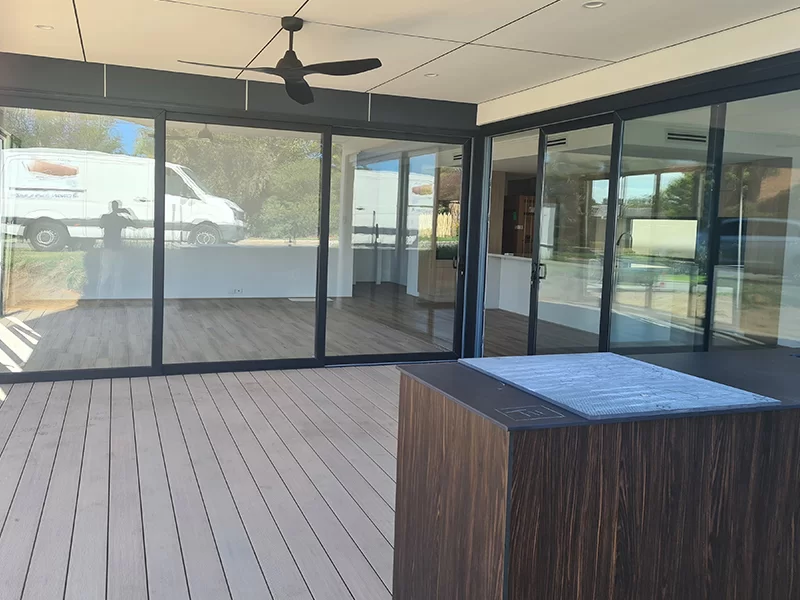
Glass doors are often the largest glazed areas in a home, so double glazing them brings the same comfort benefits on a bigger scale. Sliding, French, bifold and stacker doors can all be double glazed. Doors also need safety glass under AS 1288, the Australian Standard for glass in buildings, so laminated or toughened panes are standard.
Each of these improvements makes a home more pleasant to live in. They can also make it more attractive to the next buyer.
Does Double Glazing Add Value to a House?
Double glazing may add value to a house by improving its energy rating, though the effect is modest and depends on the market. Buyers increasingly ask about running costs and comfort, and double glazing is an easy feature to point to. It also removes a job a new owner might otherwise plan for. Location, land size and house size still drive most of a home’s price.
The best Australian evidence comes from a study by the Australian Government’s energy efficiency branch with modelling by the Australian Bureau of Statistics. Berry, Marker and Chevalier (2008) analysed 5,104 detached house sales in the ACT in 2005 and 2006 and found that each extra star of house energy rating was associated with prices about 3% higher. At the Canberra median of the time, that was worth about $11,000. The authors stress that this is an association rather than proof of cause, and that results may differ outside the ACT.
Better windows are only one part of an energy rating, so the value gain is not guaranteed. That is one of several honest limits worth weighing before you commit.
The Downsides of Double Glazing
Double glazing has real downsides, mostly around upfront cost, repairs and what it cannot do on its own. None of them outweigh the benefits for most Perth homes, but each one is worth knowing. These are the main trade-offs.
- Higher upfront cost. Double glazed windows cost more than single glazed ones, and the payback takes several years.
- Failed seals cannot be repaired. If the edge seal fails, the glass fogs between the panes and the whole glass unit needs replacing.
- Clear glass does not stop direct sun. Without low-E or tinted glass, double glazing does little against summer sun on east and west windows.
- It can hold heat in. A home closed up after heat has built up inside takes longer to cool, so evening ventilation matters.
- A metal frame weakens the result. Standard aluminium frames carry heat around the glass and limit the benefit.
- Heritage looks. Some character homes need special profiles or secondary glazing to keep their original appearance.
The frame point is the one most often overlooked. The NatHERS window factsheet rates the same air-filled double glazing at a U-value of 4.8 in a standard aluminium frame, 3.6 in a thermally broken aluminium frame and 3.0 in timber, with uPVC rated the same as timber by YourHome. Choosing the wrong frame can give away much of what you paid the extra for, as the comparison of uPVC vs aluminium windows explains. Most of these downsides can be avoided with the right choices at the quote stage.
How to Get the Most From Double Glazing
You get the most from double glazing by pairing it with an insulated frame, the right glass for each side of the house and careful installation. These choices decide whether the window delivers its full benefit. These are the four to get right.
Choose an Insulated Frame
A uPVC, timber or thermally broken aluminium frame stops heat bypassing the glass. uPVC also resists coastal salt air, which suits much of Perth. Standard aluminium is cheaper but gives away a large share of the double glazing’s performance.
Match the Glass to Each Wall
Use low-E or tinted glass on east and west windows that take the harshest sun. Choose laminated glass, or two panes of different thickness, for bedrooms facing a busy road. Obscure glass suits bathrooms and toilets where privacy matters.
Check the Compliance Labels
Windows sold in Australia should be built to AS 2047, the standard covering wind resistance, water penetration and air infiltration. The Queensland Building and Construction Commission notes that non-timber windows in houses must carry a compliance label that stays visible after installation. Ask to see it on the sample or the quote.
Insist on Careful Installation
A well-made window loses much of its benefit if gaps are left around the frame. Proper fixing, flashing and sealing keep out draughts, rain and noise. Ask how the installer seals the frame to the wall and what the workmanship warranty covers.
Get those four choices right and double glazing delivers on every benefit covered above. The remaining questions homeowners raise are usually quick ones.
Frequently Asked Questions About the Benefits of Double Glazing
These are the questions Perth homeowners ask most often about what double glazing does.
Does double glazing really make a difference?
Yes. NatHERS figures show double glazing cuts heat flow through a timber-framed window by about 44% compared with single glazing. Most people notice the difference straight away as cooler rooms in summer, warmer mornings in winter and less noise from outside.
Is double glazing worth it in Perth?
For most owner-occupiers, yes, because Perth’s long, hot summers make windows the main source of unwanted heat. The payback depends on the house, the frame and how long you plan to stay. Homes with large west-facing windows and old single glazed aluminium frames tend to benefit most.
Does double glazing help in summer as well as winter?
Yes. The insulating gap slows heat moving in both directions, keeping heat out in summer and warmth in during winter. For direct summer sun, low-E or tinted glass adds the most benefit, especially on east and west windows.
Can I get the benefits without replacing my windows?
Partly. Secondary glazing adds a second pane inside the existing window, and a retrofit unit can sometimes go into a sound timber frame. Both keep the original frame, so they deliver less than a full replacement, especially in old aluminium frames.
How long do the benefits last?
The benefits last as long as the sealed unit stays sealed. A well-made unit can last for decades, but a failed seal lets moisture in and lowers performance. A long warranty on the sealed glass unit is a good sign of quality.
Is double glazing good for the environment?
Double glazing reduces the energy a home uses for heating and cooling every year it is in service, which lowers the emissions tied to that energy. The overall footprint also depends on the frame material and how long the window lasts.
Getting the Benefits of Double Glazing in Your Perth Home
The benefits of double glazing come down to one thing, which is a window that stops heat moving freely in or out. That brings cooler summers, warmer winters, lower bills, quieter rooms and drier windows, with a possible lift in value. You can upgrade the hottest rooms first, replace every window at once or start with secondary glazing on windows you cannot change. Staying with single glazing means another Perth summer of heat pouring through the glass on the 27 or so days a year that pass 35°C.
Canon Double Glazing manufactures and installs uPVC double glazed windows and doors in-house across Perth. The guide to replacing single glazing with double glazing explains the options for existing homes, and you can book a free measure and quote or call (08) 9249 9974.