Choosing between sliding doors, bifold doors and stacker doors is one of the biggest decisions Perth homeowners face when opening up a living area to the backyard. Each door type changes how light moves through the home, how much of the wall you can fully open, and how the indoor and outdoor spaces connect day to day.
This guide breaks down the pros and cons of each option, the way they handle Perth conditions, and the price differences you can expect. By the end you will have the detail you need to make an informed decision before you call in a quote.
The Three Door Types at a Glance
Before we get into the detailed comparison, here is a quick summary of how the three options differ in operation, look and typical use.
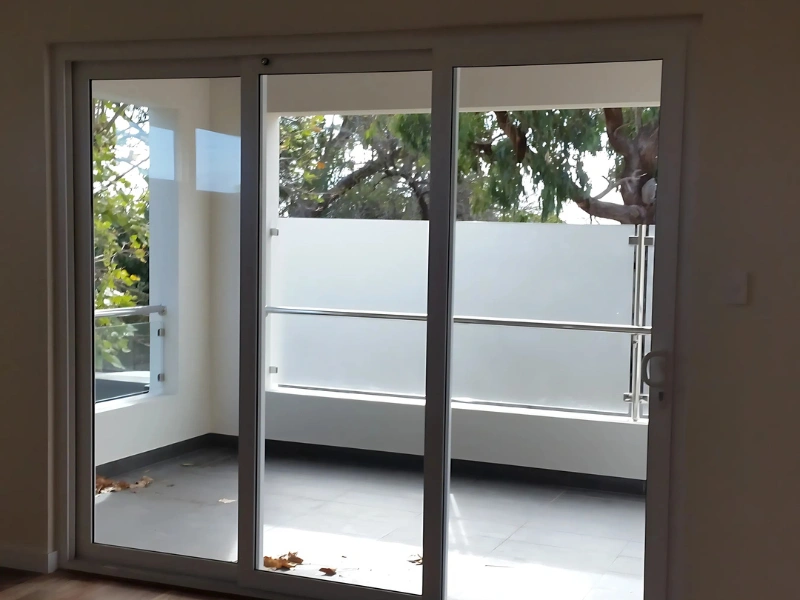
Sliding doors use two or more large glass panels that glide along a track. One panel slides behind a fixed pane, so part of the opening always stays closed. They are the most affordable option of the three, suit almost any home style, and are the most popular choice across Perth.
Bifold doors use a series of hinged door panels that concertina back against the wall when opened. They allow a fully opened wall with no fixed panels in the way, creating a seamless indoor outdoor flow. The trade-off is a higher cost and more hardware to maintain.
Stacker doors are essentially a sliding system with three or more panels that stack against each other on one side, instead of sliding behind a single fixed pane. They give you a wider opening than a standard sliding door while keeping the sleek look and lower price point.
Sliding Doors: Best for Budget and Everyday Use
Sliding doors are the workhorse of Perth backyards. The setup is simple: two fixed panels (or one fixed and one moving) on a single track. They open with a light push and take up zero floor space inside the room. For households that want a reliable, budget friendly way to access an outdoor area, a sliding door is almost always the right call.
The biggest strength of a sliding door is value. You get large glass panels, plenty of natural light, and an easy access point to the patio at the lowest price of the three options. Aluminium doors are the most common frame material, though uPVC double glazing has become popular for Perth homes that want better thermal performance and noise reduction.
The trade-off is the fixed panel. No matter how wide the door is, half the opening (or more in three-panel setups) stays closed. If a clear, wide opening is the priority, sliding doors are not the perfect solution.
Where sliding doors shine
Sliding doors suit compact spaces, smaller patios, secondary openings such as a laundry door to the side yard, and any room where you want the option to leave the door slightly open for ventilation. They also handle Perth's strong westerly sea breezes well because the locking system runs the full height of the door.
Bifold Doors: Best for the Wow Factor
Bifold doors are the option you choose when you want a bold statement. The door panels fold back like a concertina against the wall, leaving the entire opening clear with no fixed end panels. When fully opened the bi fold doors disappear, and the living area becomes one continuous open space with the outdoor living areas.
The visual impact is significant. A four or six panel bifold across a kitchen or family room creates the striking visual impact that you see in architectural magazines and Perth display homes. It is the door type that will make a buyer pause when they walk in.
The cost reflects this. Bifolds carry a higher cost than sliding or stacker doors because of the extra hinges, the top and bottom track, the multiple seals, and the more complex hardware. You also need to maintain more moving parts over time. For most Perth homes a bifold is a worthwhile investment when the door becomes a feature of the home, not just a way to get to the back deck.
Things to think about with bifolds
Bifold doors need wall space for the folded panels to sit against when open, so they do not work well where furniture or cabinetry runs right up to the door frame. They are also slower to operate than a sliding panel for everyday use; you will rarely open all the panels just to step out and water the garden. Most homeowners use one swing door at the end for daily access and fold the rest of the bi fold open for entertaining.
Stacker Doors: The Middle Ground
Stacker doors solve the main weakness of standard sliding doors. Instead of one moving panel sliding behind a single fixed pane, three, four or more panels stack neatly against each other on one side. You get the wider opening of a bifold with the price and simplicity of a slider.
Stacking sliding doors are an excellent choice for Perth homes that want the maximum opening but cannot justify the higher cost of bifolds. A three-panel stacker can deliver a clear opening close to two-thirds of the total width, and a four or five panel stacker can open the whole wall on one side.
Because stacker doors share the same track and hardware as standard sliders, the long-term maintenance is simpler than a bifold. The seals run along the same plane, the rollers are familiar to any glazier in Perth, and replacement parts are easy to source.
Where stacker doors fit
Stacker doors are the right choice when you want bigger panels and larger openings than a normal slider, you want one side of the opening to be completely clear, and you want to stay closer to the sliding door price than the bifold price. They suit alfresco areas, pool-facing walls and larger living rooms.
Cost Comparison: What You Will Pay in Perth
Prices vary by frame material, glass spec and overall width, but the general ranking holds across the market. The detailed comparison below is for a standard 2.4-metre-high opening using double glazed uPVC frames installed in Perth.
- Sliding doors (2-panel, 2.4m wide): roughly 3,500 to 5,500 dollars supplied and installed.
- Stacker doors (3-panel, 3.6m wide): roughly 6,500 to 9,500 dollars supplied and installed.
- Bifold doors (4-panel, 3.6m wide): roughly 9,000 to 14,000 dollars supplied and installed.
Aluminium frames sit roughly 15-25 percent below the uPVC numbers above. Major brands like Jason Windows price aluminium bifolds and sliders aggressively, but the long-term energy performance and condensation control of uPVC double glazing usually pays back the difference within a few years of Perth summers and winters.
Aesthetic Appeal and Light
All three door types let in plenty of light because they are mostly glass. The difference is in the framing.
Sliding doors and stacker doors have wider stiles between panels, which can look slightly heavier in a contemporary design. Bifold doors have the most framing of the three because every panel has a full perimeter frame, but when fully opened that framing disappears against the wall.
If you want to maximise natural light when the doors are closed, sliding and stacker doors win. If you want to maximise natural light and airflow when the doors are open, bifolds win. For most Perth homes the doors are closed more often than they are open, so the closed-state look matters more than people realise.
Hardware, Tracks and Maintenance
Hardware options across the three door types have improved a lot in the last decade. Modern sliding and stacker tracks use stainless rollers and brush seals that last years without service. Bifold hardware has more moving parts but the better European systems handle Perth's coastal salt air without issue.
A few practical points on maintenance:
- Sliding and stacker doors need the track kept clear of sand and dust. A vacuum every few weeks is enough.
- Bifold doors need the hinges checked annually for alignment, especially in homes near the coast.
- Screens are easy to add to sliders and stackers. Bifold screens exist but they are awkward; most owners skip them and use insect zappers instead.
Pros and Cons Summary
Here is a quick pros and cons summary to round off the comparison.
Sliding doors pros: affordable option, simple hardware, good for compact spaces, large glass panels for natural light, easy access for daily use. Sliding doors cons: at least one fixed panel always closed, opening width limited to half the wall.
Bifold doors pros: fully opened wall, seamless indoor outdoor flow, striking visual impact, customisation options across panel count and finish. Bifold doors cons: higher cost, more hardware to maintain, wall space needed for folded panels.
Stacker doors pros: wider opening than standard sliders, sleek modern look, one side fully clear, price between sliders and bifolds. Stacker doors cons: panels stack on one side so one wall section must be clear, still has fixed panel on the opposite side in most configurations.
How to Decide Which Door is Right for Your Home
The choice depends on three factors: budget, how often you actually open the door, and what you want the wall to look like when it is closed.
Pick sliding doors if you want a functional door for everyday access at the lowest cost, you like the look of two panels of glass when closed, and the room has limited wall space for stacking or folding.
Pick stacker doors if you want a wider opening than a slider, your room has wall space on one side, and you want to stay closer to the sliding door price point.
Pick bifold doors if the door is going to be a hero feature of the home, you entertain often and want the entire wall to disappear, and the higher cost fits the budget. A bifold becomes a worthwhile investment when the wow factor changes how you use the living area.
Whatever option you choose, double glazing is the upgrade that pays back fastest. Perth summers push glass to high surface temperatures, and a single-glazed door becomes a radiator inside the room. Double glazed sliding, stacker or bifold doors cut that heat transfer by more than half and quieten the room at the same time.
Frequently Asked Questions
Are bifold doors worth the extra cost over sliding doors?
Bifolds are worth the higher cost when the door is going to be a feature of the home and you genuinely want a fully opened wall for entertaining. If the door is mostly for daily access to a patio, sliding doors deliver the same practical value at a much lower price.
What is the difference between stacker doors and stacking sliding doors?
They are the same thing. Stacker doors, stacking doors and stacking sliding doors all describe a sliding system where three or more panels stack against each other on one side rather than sliding behind a single fixed pane.
Can I get sliding or bifold doors with double glazing in Perth?
Yes. All three door types are available with double glazing in either uPVC or aluminium frames. Double glazing is strongly recommended for Perth because of the heat and noise reduction benefits across summer and winter.
How wide can a bifold or stacker opening go?
Bifold systems can run up to 7 or 8 metres wide with the right structural support. Stacker doors can also reach similar widths. Standard sliding doors typically max out around 3 to 4 metres before the panels become too heavy to roll smoothly.
Which option needs the least maintenance?
Sliding doors. With only two panels and a simple track, there is less to go wrong over time. Stacker doors are close behind. Bifold doors have the most moving parts and need an annual check on the hinges, especially in coastal Perth suburbs.
Do bifold doors need wall space when open?
Yes. The folded panels sit perpendicular to the wall when fully opened, so you need clear space beside the opening for the stack. Plan for roughly 100-150mm of stack depth per panel.
Are these doors secure for a Perth home?
All three door types can be specified with multi-point locking and laminated safety glass. uPVC double glazed systems in particular use European locking hardware that exceeds the security level of standard aluminium doors.
Get a Quote on Sliding, Bifold or Stacker Doors
Canon Double Glazing manufactures and installs all three door types across Perth using premium uPVC frames and double glazed units. Whether you want the affordable option of a sliding panel system, the bold statement of bifolds, or the middle ground of stacking sliding doors, we can size and quote the door type that suits your home.
The right choice depends on your living space, the way you use the outdoor area, and the budget you have to work with. Once you decide between the three, the next step is a free measure and quote so you can compare real numbers for your home.